How to Win Two-Legged Knockout Ties: Tactical Guide
Sport I Play Team
Published
Quick Verdict
Jump to breakdown ↓Since UEFA abolished the away-goals rule, two-legged knockout ties are decided by aggregate control rather than cautious away parking. Seeded teams that host the second leg win a majority of ties by absorbing pressure in a compact 4-4-2 or 5-3-2 mid-block away, then unleashing extra-time fitness and tactical subs at home.
Jump to Section (6)Expand
- 1. How Scrapping the Away-Goals Rule Changed Knockout Football
- 2. First Leg vs. Second Leg: Tactical Comparison Table
- 3. Why Hosting the Second Leg Is a Massive Tactical Edge
- 4. Game-State Management: Protecting vs. Chasing Aggregate Leads
- 5. Applying Two-Legged Strategy in Amateur Cups & EA FC 27
- Frequently Asked Questions
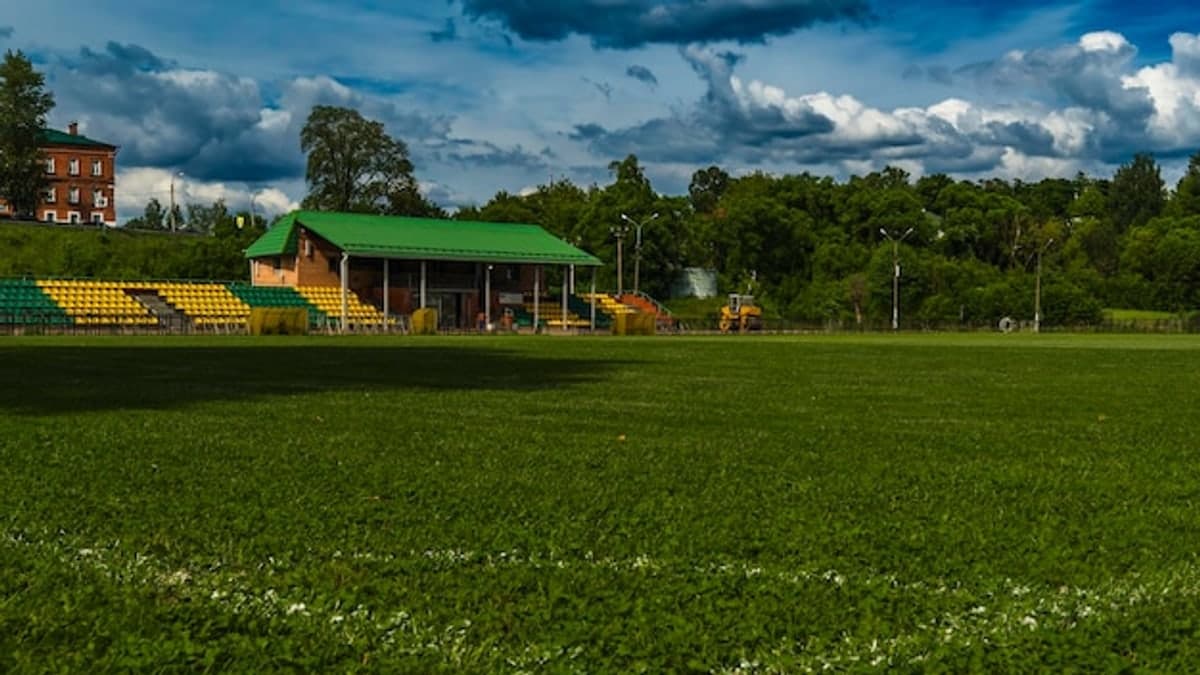
A single 90-minute final is a sprint, but a two-legged 180-minute knockout tie is a psychological and tactical chess match where one reckless 15-minute spell in the first leg can end your tournament before the return fixture even kicks off.
With the 2026/27 UEFA Nations League quarter-finalists confirmed ahead of the November 20 draw in Nyon — pitting Pot 1 group winners France, Germany, England, and Portugal against Pot 2 heavyweights Spain, the Netherlands, Belgium, and Erling Haaland's Norway — Europe's top international managers are already scripting their two-legged March blueprints.
Whether you coach a local two-legged cup tie, analyse European knockout football, or battle through Champions League and Nations League rounds in EA SPORTS FC 27 Career Mode, here is the complete tactical guide to mastering 180-minute football.
1. How Scrapping the Away-Goals Rule Changed Knockout Football
For 56 years, UEFA's away-goals rule distorted two-legged tactics: home teams in the first leg were terrified to attack because conceding a single counter-attack goal counted "double" in the event of an aggregate tie. A 0–0 draw at home in Leg 1 was bizarrely celebrated as a positive result.
Since UEFA abolished the away-goals rule across all club and international competitions, the tactical meta has shifted in three major ways:
- Home teams attack far more aggressively in Leg 1: Unseeded teams hosting the first leg (such as Pot 2 sides Spain or Norway in the Nations League quarter-finals) no longer fear conceding an away goal on the break. A 2–1 or 3–2 first-leg win carries the exact same +1 aggregate value as a 1–0 win.
- Fewer ultra-defensive 5-4-1 bus-parks in Leg 2: Previously, an away team leading 1–0 after the first leg knew that scoring once in Leg 2 forced the opponent to score three times. Today, every goal simply shifts the aggregate tally by one, keeping ties alive until the 95th minute.
- More ties reach 30 minutes of extra time: Because level aggregate scores (whether 1–1 or 4–4) now go straight to extra time, five-substitute bench depth and 120-minute stamina have become the ultimate tie-breakers.
2. First Leg vs. Second Leg: Tactical Comparison Table
How do elite coaching staffs adjust their pressing height, risk tolerance, and substitution timing between the opening 90 minutes and the return leg? Here is the side-by-side breakdown:
| Tactical Variable | First Leg (Minutes 1–90) | Second Leg (Minutes 91–180+) |
|---|---|---|
| Primary Strategic Objective | Keep the aggregate margin within ±1 goal | Force a decisive aggregate swing or lock down the clock |
| Typical Out-of-Possession Block | Compact 4-4-2 or 5-3-2 mid-block protecting the central box | High man-to-man press (if trailing) or low block + outlets (if leading) |
| Rest-Defence Structure | Conservative 3+2 rest defence to prevent transition blowouts | Asymmetric 2+1 or 2+2 when chasing a late equalizer |
| Yellow-Card Suspension Risk | High caution for players one booking away from missing Leg 2 | Tactical fouls used more freely in the final 20 minutes |
| Substitution Timing | Minutes 65–75 to maintain structural energy | Minutes 46–55 (tactical shape flip) + 85–105 (extra-time finishers) |
| Set-Piece Approach | Standard balanced delivery with 3 defenders back | Full-box overload (including goalkeeper in the 90th+ minute) |
3. Why Hosting the Second Leg Is a Massive Tactical Edge
In the 2026/27 UEFA Nations League quarter-finals, finishing top of a League A group (France, Germany, England, and Portugal) guarantees hosting the second leg at home. Why do data analysts value second-leg home advantage at roughly 55% to 58% qualification probability across evenly matched teams?
- Clarity of the target scoreline: In the first leg, nobody knows whether a 1–1 draw is a good or bad score until the tie is over. By the 60th minute of the second leg, the exact mathematical requirement is crystal clear — allowing the home crowd to fuel a 30-minute siege when one goal is needed.
- Extra time and penalty shootouts in your own stadium: If the aggregate score is level after 180 minutes, the Pot 1 seeded team gets to play an additional 30 minutes of extra time (and take penalties) in front of 60,000+ home supporters, whereas the unseeded team plays only 90 minutes at home and up to 120 minutes away.
- Travel and recovery asymmetry: Playing the decisive leg at home eliminates post-match airport travel during the tight 72-hour international window between Thursday/Friday and Sunday/Monday fixtures.
4. Game-State Management: Protecting vs. Chasing Aggregate Leads
The biggest mistake teams make in two-legged football is dropping 15 yards too deep too early when protecting a one-goal or two-goal first-leg lead.
How to Protect a First-Leg Lead Without Inviting a Siege
- Leave two rapid counter-attacking outlets high: If you drop all 11 players behind the ball in a 5-4-1 from the first whistle of Leg 2, the opposition's centre-backs can camp on your penalty arc. Keeping two fast forwards (like Kylian Mbappé or Bukayo Saka) split wide in the channels forces the chasing team's full-backs to stay honest.
- Defend with possession in the middle third: Rather than booting every clearance back to the opponent, string together 8-to-10-pass sequences across your back four and double pivot to drain the stadium's emotional momentum and force the chasing side to sprint 60 yards without the ball.
How to Overturn a First-Leg Deficit
- Aim for "One Goal per Half" — Not Three in 20 Minutes: Teams trailing 0–2 after the first leg often panic and throw seven players forward in the opening 15 minutes, only to concede a fatal counter-attack. Elite sides stay structurally balanced in a 3-2-5, aiming to score once before the 60th minute; once the deficit drops to a single goal, stadium anxiety does the rest of the work.
5. Applying Two-Legged Strategy in Amateur Cups & EA FC 27
Playing a two-legged knockout round in a local weekend league or managing a European run in EA SPORTS FC 27? Keep these three rules in your back pocket:
- Rotate your wing-backs and pressing #8s around Minute 65 of Leg 1: In amateur tournaments played on Saturday and Sunday, fresh legs in the final 25 minutes of the second game win almost every tie.
- Scout high-stamina impact substitutes in FC 27: Sign young wingers and box-to-box midfielders with the Relentless and Quick Step PlayStyles who can tear apart tired backlines in extra time. Check out our verified FC 27 Wonderkids Hub to find the best high-potential young stars (including Lamine Yamal, Warren Zaïre-Emery, and Antonio Nusa).
Ready to put your knockout game management to the test on the pitch? Book or join a local football fixture today on Sport I Play Games and connect with players across your city in Football Communities.
Frequently Asked Questions
Does the away-goals rule apply in the 2026/27 UEFA Nations League quarter-finals?
No. UEFA permanently abolished the away-goals rule across all UEFA club and national-team competitions starting in 2021. If two teams are tied on aggregate goals at the end of normal time in the second leg, the match goes directly to two 15-minute periods of extra time, followed by a penalty shootout if still level.
Which teams play the second leg at home in the UEFA Nations League quarter-finals?
The four League A group winners in Pot 1 (Seeded) — France, Germany, England, and Portugal — earn the right to play the return second leg at home between March 28 and March 30, 2027.
Why is a two-goal lead considered dangerous in the second leg of a knockout tie?
A 2–0 aggregate lead creates psychological ambiguity: the leading team often becomes passive between protecting the lead and attacking for a third, while a single goal for the trailing team immediately shifts all momentum and forces the leaders to scramble back into an attacking mindset.
Share This Guide
Play football near you
Join a local football community, find players at your level, and get on the court this week.
Sport I Play Team
The Sport I Play editorial team — passionate sports enthusiasts covering technique tips, fitness guides, and sports stories.
Keep Reading in Football
All Football
How to Defend a 1-0 Lead in Football: Complete Tactical Guide

How to Win Football Derby Matches: Complete Tactical Guide

3-4-2-1 vs 4-3-3 Football Formations: Complete Tactical Guide

MS Dhoni Tactical Genius: Deciphering His Greatest Decisions
Liverpool vs Real Madrid 2018: Kyiv UCL Final Tactical Guide

High-Pressing & Gegenpressing Guide: Football Tactics