3-4-2-1 vs 4-3-3 Football Formations: Complete Tactical Guide
Sport I Play Team
Published
Quick Verdict
Jump to breakdown ↓The 3-4-2-1 formation dominates modern tactical battles by creating a natural 4v3 box overload in central midfield while keeping three centre-backs for rest-defence security against counter-attacks. Meanwhile, the 4-3-3 remains the gold standard for high-wing pressing and wide 2v1 isolation when full-backs overlap or invert cleanly.
Jump to Section (6)Expand

Watch any Premier League matchday closely and you will notice that static paper formations barely survive the opening whistle. Teams that line up in a 4-3-3 on the broadcast graphic morph into a 3-2-4-1 in possession, while underdog sides defending in a 5-4-1 spring forward into a 3-4-2-1 the instant they win the ball back.
With Crystal Palace appointing tactical chameleon Thomas Frank to rescue their Premier League campaign and Arsenal pacing the title race through relentless structural control, the clash between the 3-4-2-1 box midfield and the 4-3-3 wide-triangle system has become the defining chess match in modern football.
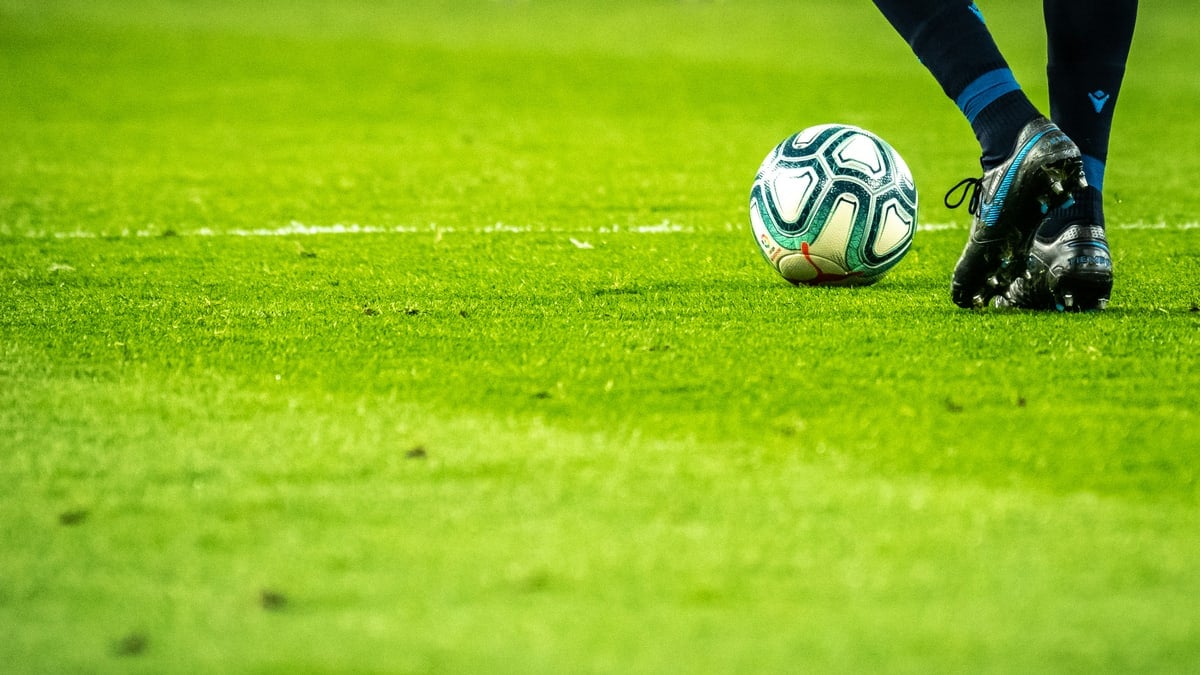
Whether you captain an 11-a-side weekend club, coach a local league squad, or fine-tune custom tactics in EA SPORTS FC 27, here is the complete tactical breakdown of 3-4-2-1 vs. 4-3-3.
1. Why Premier League Managers Love Hybrid Shapes
Why have so many top-flight managers gravitated toward three-centre-back systems like the 3-4-2-1 over the past two seasons? The answer comes down to Five-Corridor Occupation and Rest Defence.
Modern pitches are divided coaching-wise into five vertical lanes: the left wing, left half-space, central corridor, right half-space, and right wing.
- In a 3-4-2-1, your five attacking players naturally occupy all five lanes simultaneously: two wing-backs hug the touchlines, two inside-10s sit in the half-spaces, and the striker pins the central defenders.
- Behind them, a double pivot (2) and three centre-backs (3) form an automatic 3+2 rest-defence shield — meaning your team does not need to ask a full-back to invert into midfield just to arrive at the ideal 3-2-5 attacking structure.
2. 3-4-2-1 vs. 4-3-3: Head-to-Head Tactical Comparison
Choosing between a 3-4-2-1 and a 4-3-3 depends on your squad's wing-back stamina, centre-back ball progression, and winger profiles. Here is how the two systems stack up across every phase of play:
| Tactical Phase | 3-4-2-1 (Box Midfield & Wing-Backs) | 4-3-3 (Wide Triangles & High Wingers) |
|---|---|---|
| In-Possession Shape | Natural 3-2-4-1 (box midfield already formed) | Shifts to 2-3-5 or 3-2-5 via full-back movement |
| Out-of-Possession Block | Drops into a compact 5-4-1 or 5-2-3 wall | Presses in a 4-1-4-1 or 4-4-2 high block |
| Primary Overload Zone | Central Box (4v3) with 2 pivots + 2 inside-10s | Wide Flanks (2v1) with winger + overlapping full-back |
| Key Specialist Role | Two-way Wing-Backs with elite 90-minute engines | Single Pivot (#6) who can screen 50 yards of width |
| Main Vulnerability | Space behind wing-backs during quick switches of play | Central counter-attacks if both #8s get caught ahead of the ball |
| Set-Piece Advantage | 3 natural centre-backs on the pitch for aerial corners | Faster recovery runners to defend opposition short corners |
3. How the 3-4-2-1 Box Midfield Creates Overloads
When a 3-4-2-1 side plays against a standard 4-3-3, the central battle immediately tilts in favour of the 3-4-2-1 because of the 4v3 midfield box:
- Pinning the opposition's single pivot: The two inside-10s (attacking midfielders) stand directly in the left and right half-spaces behind the 4-3-3's two number 8s. The lone defensive midfielder (#6) in the 4-3-3 cannot mark both 10s at the same time.
- The Centre-Back Decision Dilemma: If a 4-3-3 centre-back steps out of the backline to track one of the dropping 10s, the lone striker immediately spins into the vacated channel behind them. If the centre-back stays put, the inside-10 receives on the half-turn with time to drive at the back four.
- Wing-back switches of play: Once the 4-3-3 defense collapses inward to protect the central box, a cross-field diagonal pass finds the far-side wing-back arriving completely unmarked at the back post.
4. How the 4-3-3 Counters Three-at-the-Back Systems
The 4-3-3 has remained football's most enduring elite structure because it possesses a devastating counter-punch against three-at-the-back formations: pinning the wing-backs deep.
Three Ways a 4-3-3 Breaks the 3-4-2-1
- High and wide wingers pin the wing-backs: By keeping both wingers high on the touchline during transitions, a 4-3-3 forces the opposition's wing-backs to drop into a flat back five. A 3-4-2-1 trapped in a 5-4-1 has almost zero wide outlet when trying to counter-attack.
- Attacking the space behind the advancing wing-back: The moment a 3-4-2-1 wing-back pushes high and loses possession, the 4-3-3's near-side #8 or winger sprints straight into the wide channel outside the wide centre-back (LCB or RCB), forcing a 1v1 footrace in open grass.
- Overlapping full-back 2v1s: Against a lone wing-back, a 4-3-3 winger and overlapping full-back create an instant 2v1 on the flank before the wide centre-back can slide across to cover.
5. Coaching These Shapes in Amateur Leagues & EA FC 27
Want to apply this tactical battle to your own weekend squad or virtual dugout? Use these practical rules of thumb:
- When to use 3-4-2-1 in amateur 11-a-side: Use the 3-4-2-1 if your team has plenty of technical central midfielders and three reliable defenders, but lacks traditional chalk-on-the-boots dribbling wingers. Just make sure you rotate your wing-backs every 30 minutes so they do not burn out!
- When to use 4-3-3 in amateur 11-a-side: Stick to the 4-3-3 if your best athletes are rapid wide forwards who thrive in 1v1 dribbles and high pressing.
- Scouting for the system in EA FC 27: If you run a 3-4-2-1 in Career Mode, prioritize signing wide centre-backs with 80+ Sprint Speed and inside-10s with the Incisive Pass and Technical PlayStyles. Browse our verified FC 27 Wonderkids Hub to filter the best high-potential young wing-backs and playmakers.
Ready to take your tactics from the whiteboard to the turf? Book or join a local football match today on Sport I Play Games and connect with players across India in Football Communities.
Frequently Asked Questions
What is the main difference between 3-4-2-1 and 3-4-3?
In a traditional 3-4-3, the two wide attackers play as touchline wingers while the wing-backs stay slightly deeper. In a 3-4-2-1, the wing-backs provide all the width while the two supporting attackers tuck inside into the half-spaces as dual number 10s, forming a four-man box with the two central midfielders.
Why does the 3-4-2-1 work so well against a 4-3-3?
Because the 3-4-2-1 places four players in the central midfield zone (two pivots and two inside-10s) against the three central midfielders of a 4-3-3, creating a natural 4v3 numerical overload between the lines.
What is the biggest weakness of the 3-4-2-1 formation?
The spaces directly behind the two wing-backs. If a team turns the ball over while both wing-backs are high up the pitch, the outside centre-backs are dragged wide into 1v1 footraces against fast opposition wingers.
Share This Guide
Play football near you
Join a local football community, find players at your level, and get on the court this week.
Sport I Play Team
The Sport I Play editorial team — passionate sports enthusiasts covering technique tips, fitness guides, and sports stories.
Keep Reading in Football
All Football
How to Defend a 1-0 Lead in Football: Complete Tactical Guide

How to Win Football Derby Matches: Complete Tactical Guide

High-Pressing & Gegenpressing Guide: Football Tactics
How to Win Two-Legged Knockout Ties: Tactical Guide
How to Break Down Low-Block Defenses in Football: Guide

7 Turf Football Mistakes: How to Win 5-a-Side Games